 Member state · EU since 1981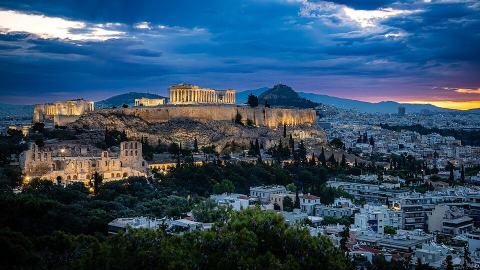
The story
Democracy, philosophy, theatre, the Olympics, geometry: the classical Greeks invented the West's operating system in a few extraordinary centuries, then spent two millennia under Rome, Byzantium (which was Greek-speaking and lasted a thousand years), and the Ottomans. Independence came in 1830 after a revolution that captivated Europe. The 2010s debt crisis tested the country severely; the 2020s have seen a striking recovery.
The people
Greek identity binds language, Orthodoxy, and philotimo, an untranslatable code of honour and hospitality that means a stranger at your table is a gift. Life is lived outdoors and late: dinner at ten, argument as sport, name days over birthdays, and August belongs to the islands, where half of Athens decamps.
The economy
Shipping is the quiet giant: Greek owners control the world's largest merchant fleet, around a fifth of global tonnage. Tourism (30+ million visitors), olive oil (third largest producer), and a growing tech scene in Athens fill out the picture. The recovery since 2018 has been among the eurozone's fastest.
Traveling there
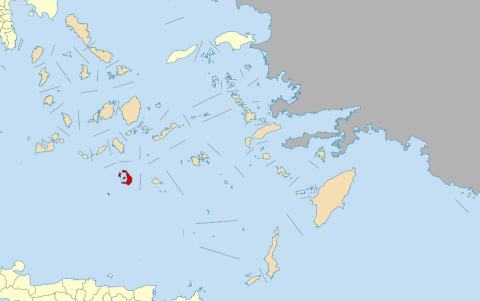
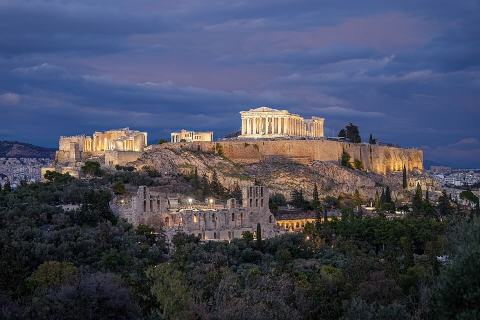
Athens deserves days, not hours, then choose your islands: Cyclades for the postcard (Santorini, Naxos, Milos), Ionian for green cliffs and Venetian towns, Crete for everything at once. Ferries are the way; island hop in September when the sea is warmest and the crowds thin.
Cities to visit
Beyond the cities
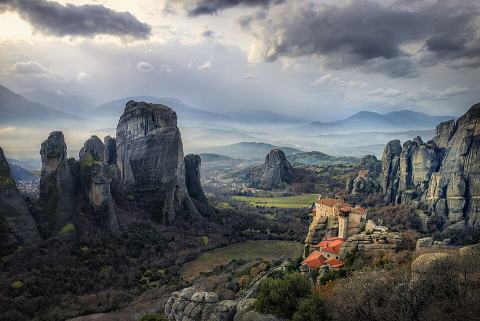
Monasteries balanced on sandstone pinnacles hundreds of meters in the air, half geology, half faith, entirely unreal.
~4h from Athens by train to Kalambaka. Dress modestly for the monasteries; sunset from the viewpoints is the show.
What's on
Ancient drama and concerts in the Odeon of Herodes Atticus under the Acropolis.